
Acanthosis nigricans treatment in Jaipur is increasingly sought by people who notice dark, thickened and velvety skin around the neck, underarms, groin or other body folds. Although many people initially consider this to be simple pigmentation or a result of poor hygiene, acanthosis nigricans can sometimes be an important visible sign of insulin resistance, prediabetes, diabetes, obesity or hormonal problems.
At Collagen Clinics, Jaipur, Dr Priyanka Sharma evaluates acanthosis nigricans not only as a skin concern but also as a possible marker of an underlying metabolic or hormonal condition. Treatment is therefore individualized according to the patient’s age, medical history, skin type, severity, associated conditions and laboratory findings.
The good news is that acanthosis nigricans can often improve significantly when the underlying cause is identified and appropriately managed. Skin-directed treatments may also be used to improve texture and pigmentation when required.
What Is Acanthosis Nigricans?
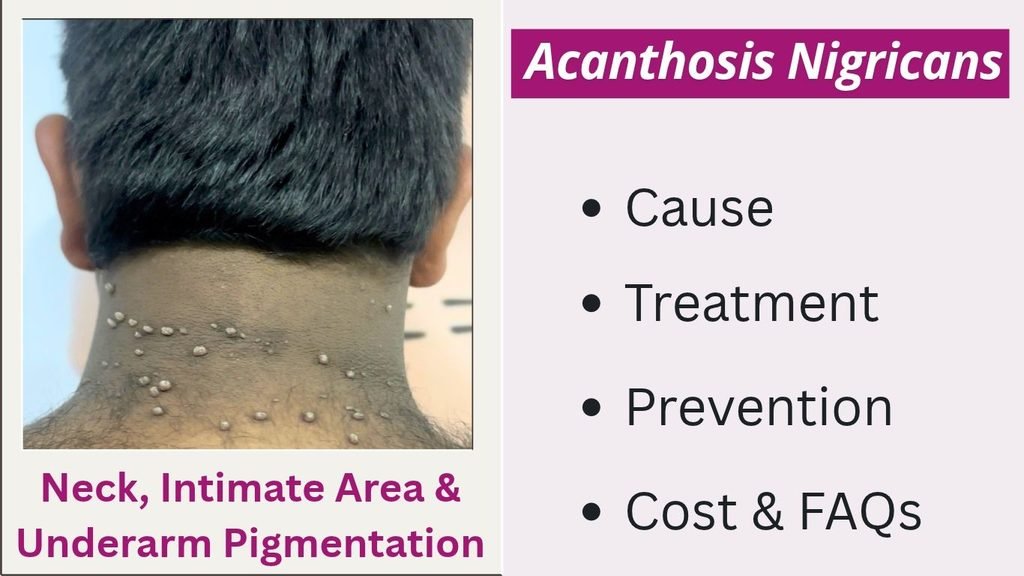
Acanthosis nigricans is a skin condition characterized by dark, thickened, velvety or slightly raised patches of skin. It most commonly affects areas where skin folds or rubs together.
Common locations include:
- Back and sides of the neck
- Underarms
- Groin
- Inner thighs
- Under the breasts
- Elbows and knees in some patients
- Knuckles in certain cases
The affected skin may gradually become darker and thicker. Some patients also have associated skin tags, particularly around the neck and underarms.
Acanthosis nigricans is commonly associated with insulin resistance and metabolic conditions. However, not every dark patch on the neck is acanthosis nigricans. Conditions such as fungal infections, eczema, frictional pigmentation and other causes of hyperpigmentation can sometimes look similar.
Therefore, an accurate dermatological diagnosis is important before starting treatment.
Why Does Acanthosis Nigricans Occur?
One of the most common causes of acanthosis nigricans is insulin resistance.
Insulin is a hormone that helps glucose move from the blood into cells. When the body becomes less responsive to insulin, the pancreas may produce more insulin to compensate. Increased insulin levels can stimulate receptors involved in the growth of skin cells, resulting in increased thickening of the epidermis and the characteristic appearance of acanthosis nigricans.
This is why acanthosis nigricans may occur in people with:
- Overweight or obesity
- Insulin resistance
- Prediabetes
- Type 2 diabetes
- Polycystic ovary syndrome (PCOS)
- Metabolic syndrome
- Certain hormonal disorders
However, insulin resistance is not the only possible cause.
Less common causes include certain medications, inherited forms of acanthosis nigricans, endocrine disorders and, very rarely, an underlying malignancy.
Is Acanthosis Nigricans a Sign of Diabetes?
It can be.
Acanthosis nigricans is an important clinical marker of insulin resistance and may occur before diabetes becomes apparent. Studies have found an association between acanthosis nigricans and type 2 diabetes.
However, having acanthosis nigricans does not automatically mean that you have diabetes.
A dermatologist may recommend appropriate blood tests depending on your age, weight, symptoms, family history and clinical examination.
Possible investigations may include:
- Fasting blood glucose
- HbA1c
- Lipid profile
- Liver function tests when clinically indicated
- Hormonal evaluation in selected patients
- Evaluation for PCOS in appropriate women
- Other tests based on individual risk factors
The purpose is not simply to treat the pigmentation but to identify and address the reason behind it.
Acanthosis Nigricans and PCOS
In young women, particularly those with irregular periods, acne, increased facial or body hair or weight gain, acanthosis nigricans may occur in association with polycystic ovary syndrome (PCOS) and insulin resistance.
If your dermatologist suspects an underlying hormonal or metabolic issue, further evaluation may be recommended.
Treating the associated condition can be an important part of improving acanthosis nigricans.
What Does Acanthosis Nigricans Look Like?
Typical acanthosis nigricans appears as:
- Dark brown, greyish-brown or blackish skin
- Thickened skin
- Velvety texture
- Poorly defined borders
- Symmetrical involvement
- Predominantly affecting skin folds
The neck is one of the most common locations.
Some patients notice that the pigmentation gradually becomes more prominent over several months or years. Others may notice it relatively quickly.
In children and teenagers, darkening of the neck can sometimes be one of the earliest visible signs of insulin resistance, particularly when associated with overweight or obesity.
Acanthosis Nigricans Is Not Caused by Poor Hygiene
This is an important point.
Many patients repeatedly scrub the neck or underarms because they believe the darkness is due to dirt. Aggressive scrubbing, loofahs, exfoliating gloves or harsh bleaching products generally do not address the underlying cause.
In fact, excessive rubbing and irritation can make pigmentation worse.
Acanthosis nigricans is a medical skin condition, not simply dirt that can be washed away.
How Is Acanthosis Nigricans Diagnosed?
In most cases, a dermatologist can diagnose acanthosis nigricans through clinical examination.
The doctor may ask about:
- Weight changes
- Diabetes
- Family history of diabetes
- Menstrual history
- PCOS symptoms
- Current medications
- Diet and physical activity
- Other medical conditions
- Duration and progression of pigmentation
A skin biopsy is usually not necessary when the appearance is typical, but it may be considered when the diagnosis is uncertain. Other conditions that can resemble acanthosis nigricans may need to be excluded.
Acanthosis Nigricans Treatment in Jaipur
The best treatment for acanthosis nigricans depends on why it has developed.
There is no single cream or procedure that works for every patient.
At Collagen Clinics, the treatment approach may involve two components:
1. Treating the underlying cause
If insulin resistance, obesity, prediabetes, diabetes or another metabolic condition is present, management of that condition is an important part of treatment.
Lifestyle changes, including healthy eating and regular physical activity, can help improve insulin sensitivity. Weight reduction, when appropriate, may also lead to gradual improvement in acanthosis nigricans.
Patients with diabetes, PCOS or other endocrine disorders may also require management by their physician or an endocrinologist/gynecologist.
2. Treating the skin changes
Once the underlying cause is addressed, dermatological treatment can be considered to improve:
- Skin thickness
- Roughness
- Hyperkeratosis
- Pigmentation
- Overall appearance
Depending on the patient, dermatologists may consider topical medications, keratolytic agents, chemical peels or selected laser-based procedures.
Treatment should be individualized, particularly in Indian skin types where aggressive procedures can sometimes result in post-inflammatory hyperpigmentation.
Topical Treatment for Acanthosis Nigricans
Topical treatment may be useful in selected patients, particularly when the skin is thickened or rough.
Depending on the clinical situation, a dermatologist may prescribe ingredients such as:
Topical Retinoids
Retinoids such as tretinoin or adapalene can help normalize abnormal keratinization and reduce the thickness of the affected skin.
They should not be used indiscriminately because irritation may cause additional pigmentation, especially in darker skin types.
Keratolytic Ingredients
Ingredients such as:
- Lactic acid
- Urea
- Salicylic acid
- Glycolic acid
may help reduce excessive thickening and improve skin texture.
The concentration and frequency should be selected according to the patient’s skin type and sensitivity.
Other Prescription Treatments
In selected cases, dermatologists may consider other topical medications such as vitamin D analogues or combination treatments.
The evidence for many topical treatments is variable, and treatment should therefore be tailored rather than based on a standard “fairness” or pigmentation cream.
Published reviews describe topical retinoids and keratolytic agents among the treatments that have been tried for acanthosis nigricans, while emphasizing that treatment of the underlying condition remains central.
Chemical Peels for Acanthosis Nigricans
Chemical peels may be considered in selected patients with persistent pigmentation and thickened skin.
Depending on the skin type and indication, dermatologists may use carefully selected peeling agents such as:
- Glycolic acid
- Salicylic acid
- Lactic acid
- Other medically appropriate peeling formulations
Chemical peels should always be performed or supervised by a qualified dermatologist.
An overly aggressive peel can cause irritation and post-inflammatory pigmentation, particularly in Indian skin.
Therefore, the goal should not be to remove pigmentation as quickly as possible. The goal is controlled improvement with minimum risk of complications.
Laser Treatment for Acanthosis Nigricans
Laser treatment is not required for every patient with acanthosis nigricans.
In selected cases, laser-based procedures may be considered when pigmentation or thickening persists despite appropriate medical management.
Published literature describes laser-based approaches, including alexandrite laser treatment, among cosmetic treatments that have been attempted for acanthosis nigricans.
However, laser treatment must be selected carefully.
The choice of device, wavelength, fluence, pulse duration and treatment interval should depend on:
- Skin type
- Degree of pigmentation
- Thickness of lesions
- Location
- Previous treatment
- Risk of post-inflammatory pigmentation
A dermatologist should determine whether laser treatment is actually appropriate.
Can Weight Loss Improve Acanthosis Nigricans?
Yes, in patients whose acanthosis nigricans is related to obesity or insulin resistance, improving metabolic health and reducing excess weight can lead to improvement in the skin.
However, the skin may not return to normal immediately.
Even after improvement in insulin resistance, pigmentation and thickening can take time to fade.
The most effective strategy is therefore not to focus exclusively on removing pigmentation but to address the metabolic factors contributing to the condition.
Can Acanthosis Nigricans Be Completely Cured?
The outcome depends on the cause.
When acanthosis nigricans is associated with obesity or insulin resistance, improvement in the underlying condition can lead to significant improvement and sometimes near-complete resolution.
However, persistent pigmentation may remain even after metabolic health improves.
Some patients may therefore benefit from additional dermatological treatment.
The prognosis of benign acanthosis nigricans is generally favorable when the underlying cause is appropriately managed.
What Should You Avoid If You Have Dark Neck Pigmentation?
Avoid experimenting with harsh home remedies or bleaching products.
Common mistakes include:
- Scrubbing the neck aggressively
- Using lemon juice
- Applying baking soda
- Using undiluted acids
- Applying steroid-containing fairness creams without medical advice
- Repeatedly using strong exfoliating products
- Trying unregulated skin-lightening creams
- Treating the pigmentation without investigating its cause
These approaches may irritate the skin and potentially worsen pigmentation.
When Should You See a Dermatologist?
You should consider a dermatological consultation if:
- Your neck has suddenly become darker
- The skin has become thick or velvety
- You have similar pigmentation in the underarms or groin
- You have unexplained weight gain
- You have a family history of diabetes
- You have irregular periods or symptoms suggestive of PCOS
- You have multiple skin tags
- The pigmentation is progressively increasing
- You have tried home remedies without improvement
A dermatologist can determine whether the pigmentation is actually acanthosis nigricans and whether additional medical evaluation is necessary.
When Can Acanthosis Nigricans Be a Warning Sign?
Most cases of acanthosis nigricans are associated with metabolic or hormonal factors rather than cancer.
However, sudden, extensive or rapidly progressive acanthosis nigricans, especially in an older person without the usual metabolic risk factors, warrants appropriate medical evaluation.
Rarely, acanthosis nigricans can occur as a paraneoplastic manifestation of an internal malignancy. Malignant acanthosis nigricans may develop relatively rapidly and can be associated with extensive involvement, itching and mucosal lesions.
This does not mean that every person with dark neck pigmentation needs an extensive cancer investigation.
The evaluation should be guided by the patient’s age, symptoms, examination and risk factors.
Acanthosis Nigricans in Children and Teenagers
Acanthosis nigricans can occur in children and adolescents.
Darkening and thickening around the neck may sometimes be an early visible marker of insulin resistance, particularly in children with excess weight.
Parents should not assume that the child simply has a “dirty neck.”
If the appearance is typical, a pediatric or dermatology consultation can help determine whether metabolic screening is appropriate.
Early identification of insulin resistance provides an opportunity to improve lifestyle and metabolic health before more serious complications develop.
Acanthosis Nigricans Treatment at Collagen Clinics, Jaipur
At Collagen Clinics, the approach to acanthosis nigricans is focused on identifying the cause rather than simply prescribing a pigmentation cream.
A typical consultation may include:
Step 1: Clinical examination
The dermatologist examines the neck, underarms, groin and other affected areas.
Step 2: Medical history
Relevant medical, family, medication, menstrual and lifestyle history is assessed.
Step 3: Assessment of metabolic risk
Depending on the patient’s presentation, appropriate investigations may be advised.
Step 4: Individualized skin treatment
If required, topical treatment, chemical peels or other dermatological procedures may be considered.
Step 5: Follow-up
Response is assessed over time and treatment is adjusted according to clinical improvement.
This individualized approach is particularly important because the treatment of acanthosis nigricans is not simply a pigmentation treatment.
How Long Does Acanthosis Nigricans Treatment Take?
There is no fixed treatment duration.
Some patients may begin noticing improvement after the underlying metabolic problem is addressed, while others may require several months of combined management.
The thickness of the skin may improve before the pigmentation completely fades.
Consistency is important.
Patients should also understand that improvement in acanthosis nigricans is generally gradual rather than immediate.
Is Acanthosis Nigricans Treatment Safe for Indian Skin?
Yes, appropriate dermatological treatment can be performed safely, but treatment needs to be individualized.
Indian skin commonly has a higher tendency to develop post-inflammatory hyperpigmentation after irritation or aggressive procedures.
Therefore, treatments such as chemical peels and lasers should not be selected simply because they promise faster lightening.
A dermatologist should consider skin type, pigmentation severity, location and previous history before choosing a procedure.
Frequently Asked Questions About Acanthosis Nigricans Treatment in Jaipur
1. What is the best treatment for acanthosis nigricans?
The best treatment depends on the cause. If insulin resistance, obesity, diabetes or PCOS is contributing, managing the underlying condition is the most important step. Dermatological treatments can subsequently help improve skin texture and pigmentation.
2. Can acanthosis nigricans be treated permanently?
Acanthosis nigricans may improve substantially when its underlying cause is controlled. However, the degree of improvement varies between individuals, and some pigmentation may persist.
3. Is dark skin on the neck always acanthosis nigricans?
No. Dark neck pigmentation can have several causes, including friction, dermatitis, fungal infections and other pigmentation disorders. A dermatologist should make the diagnosis.
4. Does acanthosis nigricans mean I have diabetes?
Not necessarily. However, because acanthosis nigricans can be associated with insulin resistance and diabetes, appropriate metabolic evaluation may be recommended depending on your risk factors.
5. Can acanthosis nigricans occur without diabetes?
Yes. It may occur with insulin resistance, obesity, PCOS, certain endocrine disorders, medications or other causes even when diabetes has not been diagnosed.
6. Can creams remove acanthosis nigricans?
Certain prescription creams can improve the thickness and appearance of affected skin. However, creams alone may not adequately address the underlying cause.
7. Is laser treatment necessary?
No. Laser treatment is not necessary for everyone. It may be considered in selected patients with persistent pigmentation after appropriate evaluation.
8. Can chemical peels help dark neck caused by acanthosis nigricans?
Chemical peels may help selected patients, but they must be performed carefully. Over-treatment can cause irritation and post-inflammatory hyperpigmentation.
9. Can children develop acanthosis nigricans?
Yes. In children and teenagers, it can sometimes be associated with obesity and insulin resistance and should be evaluated appropriately.
10. Which doctor treats acanthosis nigricans in Jaipur?
A dermatologist can diagnose acanthosis nigricans and assess whether underlying metabolic or hormonal evaluation is required. Depending on the findings, collaboration with a physician, endocrinologist or gynecologist may be appropriate.
11. Can acanthosis nigricans go away after weight loss?
In patients where excess weight and insulin resistance contribute to the condition, improving metabolic health and losing excess weight may lead to gradual improvement.
12. Should I scrub my dark neck?
No. Aggressive scrubbing can irritate the skin and potentially worsen pigmentation. If the pigmentation is due to acanthosis nigricans, treating the underlying cause is more important.
Why Choose a Dermatologist for Acanthosis Nigricans Treatment in Jaipur?
Acanthosis nigricans sits at the intersection of dermatology, metabolic health and hormonal health.
A dermatologist can help determine whether the pigmentation is actually acanthosis nigricans, identify associated skin findings and decide whether medical investigations or additional specialist evaluation are needed.
At Collagen Clinics, Jaipur, the treatment approach focuses on accurate diagnosis, identification of underlying factors and carefully selected dermatological treatment rather than using aggressive pigmentation procedures without understanding the cause.
Conclusion
Acanthosis nigricans treatment in Jaipur should begin with understanding why the skin has become dark and thickened.
Although the condition is visible on the skin, it can sometimes provide an important clue about underlying insulin resistance, prediabetes, diabetes, obesity or hormonal disorders.
Treatment therefore usually involves addressing the underlying condition along with appropriate dermatological management of the skin.
If you notice persistent dark, thick or velvety skin on your neck, underarms or groin, do not assume that it is simply dirt or tanning. A dermatological assessment can help establish the diagnosis and determine whether further evaluation is needed.
For consultation and individualized treatment of acanthosis nigricans in Jaipur, consult Dr Priyanka Sharma at Collagen Clinics.