Blackheads are one of the most common skin concerns affecting teenagers and adults. They usually appear as small dark spots on the nose, forehead, chin and cheeks, making the skin look uneven and congested. Although blackheads are generally harmless, persistent blackheads can affect skin appearance and may become frustrating when regular face washes, scrubs and home remedies fail to provide satisfactory results.
If you are looking for blackhead removal in Jaipur, professional dermatological treatment can help manage clogged pores, reduce blackheads and improve overall skin texture.
Dr Priyanka Sharma, an experienced dermatologist in Jaipur, provides personalised evaluation and treatment for acne, comedones, blackheads and other skin concerns. Depending on the condition of your skin, treatment may include medical skincare, topical medications, professional comedone extraction, chemical peels and other appropriate dermatological procedures.
At Collagen Clinics, the focus is on identifying the underlying cause of blackheads and selecting treatments that improve skin health without causing unnecessary irritation or damage.
Whether you have stubborn blackheads on your nose or recurring clogged pores across your face, understanding the causes and available treatment options can help you achieve healthier-looking skin.
What Are Blackheads?
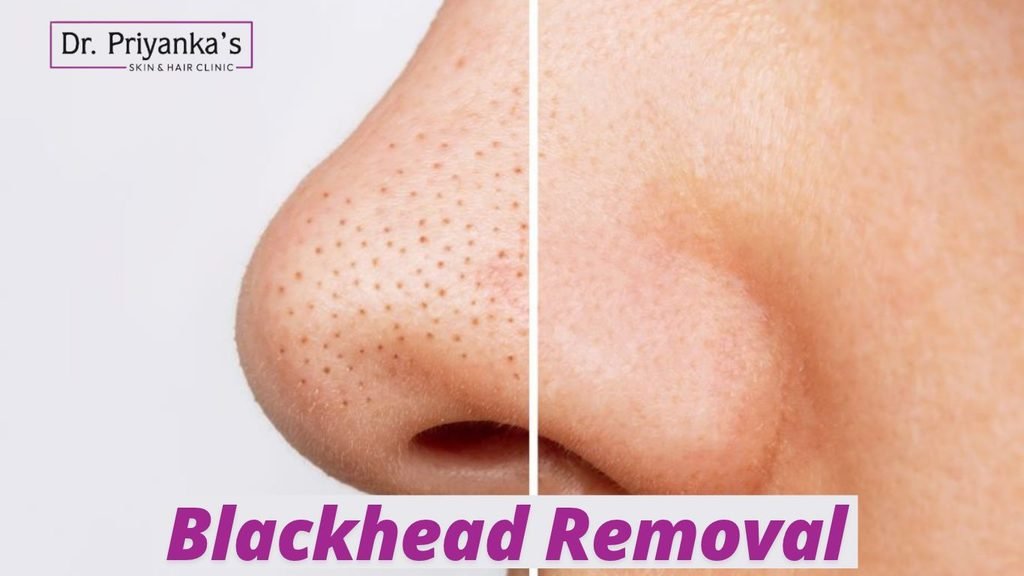
Blackheads are a type of non-inflammatory acne lesion known medically as open comedones.
They develop when hair follicles become blocked with a combination of:
- Excess sebum (natural skin oil).
- Dead skin cells.
- Keratin and other cellular debris.
When this material accumulates inside a hair follicle and the opening remains exposed to the skin surface, it forms a blackhead.
The dark appearance is not caused by dirt. It occurs because the material inside the open follicle undergoes oxidation and other changes when exposed to air.
Blackheads commonly appear on areas of the face where sebaceous glands are more active, particularly the nose, forehead and chin.
They may occur independently or alongside other forms of acne, including whiteheads, papules and pustules.
What Causes Blackheads on the Face?
Blackheads develop due to a combination of increased sebum production, abnormal shedding of skin cells and blockage of hair follicles.
Several factors can contribute to their formation.
1. Excess Oil Production
Sebaceous glands produce sebum to lubricate and protect the skin.
However, excessive sebum production can contribute to pore congestion, particularly in people with naturally oily or acne-prone skin.
The nose, forehead and chin are especially susceptible because they contain a relatively high concentration of sebaceous glands.
2. Accumulation of Dead Skin Cells
Skin cells naturally shed from the surface of the skin.
When dead skin cells accumulate inside hair follicles and mix with sebum, they can form comedones.
This is one of the main mechanisms responsible for blackhead formation.
3. Hormonal Changes
Hormonal fluctuations can influence sebaceous gland activity.
Blackheads are particularly common during:
- Puberty.
- Adolescence.
- Menstrual cycle-related hormonal fluctuations.
- Certain hormonal disorders.
- Periods of increased androgen activity.
4. Comedogenic Skincare Products
Some skincare, haircare and cosmetic products may contribute to pore congestion in susceptible individuals.
Heavy creams, certain oils and unsuitable makeup products may worsen comedonal acne.
Choosing non-comedogenic skincare products can help reduce this risk.
5. Inadequate or Harsh Skincare Practices
Not cleansing the skin appropriately may allow makeup, sunscreen and excess oil to accumulate.
On the other hand, excessive washing, aggressive scrubbing and harsh exfoliation can damage the skin barrier and worsen irritation.
A balanced skincare routine is more beneficial than aggressive cleaning.
6. Genetic Factors
Genetics can influence sebum production, skin characteristics and susceptibility to acne.
Individuals with oily and acne-prone skin may be more likely to develop recurrent blackheads.
7. Environmental Factors
Humidity, sweat, pollution and exposure to certain occupational substances may contribute to skin congestion or irritation in some individuals.
However, blackheads are not simply caused by environmental dirt.
Where Do Blackheads Commonly Appear?
Blackheads can develop on different parts of the face and body.
Blackheads on the Nose
The nose is one of the most common locations for blackheads because it contains numerous sebaceous glands.
Small dark spots on the nose may represent true blackheads or sebaceous filaments. These conditions look similar but are not identical.
Blackheads on the Chin
Blackheads on the chin may occur due to increased oil production and follicular blockage. They may also coexist with hormonal acne.
Blackheads on the Forehead
The forehead is part of the T-zone, an area that commonly produces more sebum.
Hair oils, styling products and unsuitable skincare products may contribute to congestion in some individuals.
Blackheads on the Cheeks
Blackheads on the cheeks may occur in individuals with oily or acne-prone skin. They can sometimes be associated with enlarged pores and other comedonal lesions.
Blackheads on the Back and Chest
Blackheads can also develop on the back, shoulders and chest because these areas contain sebaceous glands.
Extensive or persistent lesions in these areas may require dermatological treatment.
Difference Between Blackheads, Whiteheads & Sebaceous Filaments
Many people confuse blackheads with whiteheads and sebaceous filaments. Although these conditions may look similar, they have different characteristics.
| Feature | Blackheads | Whiteheads | Sebaceous Filaments |
|---|---|---|---|
| Medical term | Open comedones | Closed comedones | Normal follicular structures |
| Appearance | Dark or black spots | Small white or skin-coloured bumps | Tiny greyish or yellowish dots |
| Pore opening | Open | Closed | Normal follicular opening |
| Cause | Sebum and dead cells in open follicles | Blockage beneath closed follicular opening | Natural movement of sebum through follicles |
| Treatment | Skincare, retinoids, extraction when appropriate | Topical acne treatment | Usually no treatment required |
What Are Sebaceous Filaments?
Sebaceous filaments are normal structures within hair follicles that help transport sebum towards the skin surface.
They are particularly visible on the nose and chin.
Unlike blackheads, sebaceous filaments are not acne lesions and should not be treated as a disease.
Aggressive attempts to remove them can irritate the skin and damage the skin barrier.
A dermatologist can help differentiate between true blackheads and sebaceous filaments before recommending treatment.
Professional Blackhead Removal Treatment in Jaipur
If blackheads are persistent, recurrent or resistant to regular skincare, professional dermatological treatment may help.
Dr Priyanka Sharma evaluates the skin type, severity of comedonal acne, presence of inflammation and previous skincare history before recommending treatment.
The available options include the following.
1. Professional Comedone Extraction
Comedone extraction is a procedure used to remove blackheads and selected whiteheads from the skin.
It is generally performed using sterile instruments designed for controlled extraction.
During the procedure:
- The skin is cleansed appropriately.
- The dermatologist identifies suitable comedones for extraction.
- Selected blackheads are removed using controlled pressure and appropriate instruments.
- The treated area is cleaned.
- Suitable post-procedure skincare is recommended.
Benefits of professional blackhead extraction:
- Immediate removal of selected visible blackheads.
- Improvement in the appearance of congested areas.
- Reduction in the need for patients to squeeze lesions themselves.
- Better control over extraction technique and skin trauma.
Not every blackhead should be extracted. Deep, inflamed or unsuitable lesions may require medical treatment instead.
Excessive pressure or inappropriate extraction can cause redness, bruising, skin injury, pigmentation and scarring.
2. Chemical Peels for Blackheads
Chemical peels are useful in selected patients with comedonal acne and congested skin.
They involve the controlled application of chemical agents that help exfoliate the skin and improve the removal of dead skin cells.
Commonly used peeling agents include:
Salicylic Acid Peel
Salicylic acid is a beta-hydroxy acid (BHA) with oil-soluble properties.
It can penetrate into sebaceous follicles and help reduce pore congestion.
Potential benefits include:
- Improving blackheads.
- Reducing comedonal acne.
- Helping control excess surface oil.
- Improving uneven skin texture.
Glycolic Acid Peel
Glycolic acid is an alpha-hydroxy acid (AHA) that helps exfoliate the skin surface.
It may improve superficial skin roughness and support the management of comedonal acne as part of an appropriate treatment plan.
Combination Chemical Peels
Depending on the patient’s skin condition, dermatologists may consider combination formulations containing different exfoliating agents.
The choice of peel depends on skin type, acne severity, sensitivity and pigmentation risk.
Chemical peels should be performed by appropriately trained professionals using suitable formulations and protocols.
3. Topical Retinoids
Topical retinoids are among the most useful medical treatments for blackheads and comedonal acne.
Examples include:
- Adapalene.
- Tretinoin.
- Other dermatologist-prescribed topical retinoids.
They help normalise follicular keratinisation, reduce the formation of new comedones and improve existing acne lesions over time.
Unlike extraction, which removes selected existing blackheads, topical retinoids address the underlying tendency towards comedone formation.
Possible side effects include dryness, redness, peeling and irritation, particularly during the initial weeks of treatment.
Topical retinoids should be used according to medical advice. They are generally avoided during pregnancy as a precaution.
4. Salicylic Acid-Based Skincare
Salicylic acid is frequently used in skincare products for oily and acne-prone skin.
It helps exfoliate inside the follicular opening and may improve mild blackheads and pore congestion.
Depending on the formulation, salicylic acid may be available in cleansers, leave-on products and professional chemical peels.
The concentration and frequency of use should be selected according to skin sensitivity.
5. Medical Management of Comedonal Acne
Some patients have extensive blackheads along with whiteheads, inflammatory acne or recurrent breakouts.
In such cases, treatment may require a combination of medical skincare and prescription medications.
The dermatologist may recommend:
- Topical retinoids.
- Salicylic acid-based products.
- Benzoyl peroxide when inflammatory acne is also present.
- Appropriate moisturisers.
- Non-comedogenic sunscreen.
- Other acne treatments depending on clinical findings.
The objective is to reduce existing comedones and prevent new lesions from developing.
6. Hydrafacial and Other Skin Cleansing Procedures
Some patients explore Hydrafacial and other professional skin cleansing procedures for congested skin.
These procedures may help remove surface debris, improve hydration and temporarily improve the appearance of skin texture.
However, they should not be considered a replacement for medical treatment of persistent comedonal acne.
The suitability of any facial or extraction-based procedure depends on the patient’s skin condition and sensitivity.
Blackhead Removal on the Nose – What Is the Best Treatment?
Nose blackheads are among the most frequently searched skin concerns.
The nose has a high density of sebaceous glands, making it particularly susceptible to visible follicular congestion.
The best treatment depends on whether the spots are true blackheads or normal sebaceous filaments.
For true blackheads, management may involve:
- Topical adapalene or another suitable retinoid.
- Salicylic acid-based skincare.
- Professional comedone extraction.
- Chemical peels in selected patients.
- Long-term maintenance skincare.
If the spots are sebaceous filaments, complete permanent removal is generally not possible because they are normal structures.
Repeated squeezing and pore strips may provide temporary cosmetic improvement but do not prevent their return.
Blackhead Removal at Home: What Works?
Mild blackheads can sometimes improve with a consistent skincare routine.
However, home treatment should be gentle and appropriate for the skin type.
1. Use a Gentle Face Wash
Wash your face with a mild cleanser once or twice daily, depending on your skin type.
Avoid harsh soaps and excessive washing.
2. Consider Salicylic Acid
A suitable salicylic acid cleanser or leave-on formulation may help reduce pore congestion.
Start gradually to assess skin tolerance.
3. Use a Non-Comedogenic Moisturiser
Even oily skin needs moisturisation.
Choose a lightweight moisturiser that does not unnecessarily clog pores.
4. Apply Sunscreen
Use a broad-spectrum sunscreen with SPF 30 or higher during the day.
Sunscreen is particularly important if you are using exfoliating products or retinoids.
5. Avoid Aggressive Scrubbing
Scrubbing does not remove the underlying cause of blackheads.
Harsh exfoliation can cause redness, irritation and post-inflammatory pigmentation.
6. Avoid Squeezing Blackheads
Using fingernails, needles or improvised extraction tools can injure the skin.
It may cause inflammation, infection, pigmentation and scarring.
For persistent blackheads, professional assessment is preferable.
What Should You Avoid When Treating Blackheads?
Several popular home remedies and cosmetic practices may worsen skin irritation.
Avoid the following:
1. Toothpaste: Toothpaste is not a scientifically established blackhead treatment and may cause irritation.
2. Lemon juice: Direct application may cause irritation and increase the risk of phototoxic reactions.
3. Baking soda: Its alkaline nature can disturb the skin’s natural barrier.
4. Excessive face scrubbing: Aggressive exfoliation can worsen inflammation and damage the skin barrier.
5. Frequent pore strip use: Pore strips may temporarily remove superficial material but do not address the underlying cause.
6. Manual squeezing: Repeated squeezing may cause skin trauma and post-inflammatory pigmentation.
A medically appropriate skincare routine is generally more effective than repeatedly trying different home remedies.
How Many Sessions Are Required for Blackhead Removal?
The number of sessions depends on the severity of blackheads and the treatment selected.
For example:
- Professional extraction may provide immediate improvement in selected lesions.
- Chemical peels may require multiple sessions depending on the formulation and clinical response.
- Topical retinoids generally require several weeks of consistent use to show meaningful improvement.
- Maintenance skincare may be needed to prevent recurrent blackheads.
Blackheads can recur because sebaceous glands continue producing oil and follicular cells continue to shed.
Therefore, long-term management is often more important than a single extraction session.
How to Prevent Blackheads from Coming Back
Preventing blackheads requires consistent skincare and management of factors contributing to pore blockage.
Follow these recommendations:
- Cleanse your face regularly with a gentle cleanser.
- Choose non-comedogenic skincare and makeup.
- Avoid sleeping with makeup on.
- Use suitable salicylic acid products if recommended.
- Consider prescription retinoids when appropriate.
- Avoid frequent harsh scrubbing.
- Wash hair regularly if oily hair products come into contact with the forehead.
- Use a suitable moisturiser.
- Apply sunscreen regularly.
- Consult a dermatologist if blackheads continue to recur.
Consistency is more important than using multiple active skincare products simultaneously.
Who Should Consult a Dermatologist for Blackhead Removal?
Professional evaluation may be useful if you have:
- Persistent blackheads despite regular skincare.
- Numerous blackheads on the nose, cheeks or forehead.
- Blackheads associated with whiteheads and inflammatory acne.
- Recurrent clogged pores.
- Enlarged-looking pores and uneven skin texture.
- Skin irritation from repeated home extraction.
- Acne scars or pigmentation associated with previous acne.
A dermatologist can determine whether the problem is true comedonal acne, sebaceous filaments or another skin condition.
Why Choose Dr Priyanka Sharma for Blackhead Removal in Jaipur?
Choosing the right dermatologist is important when treating persistent blackheads and comedonal acne.
Dr Priyanka Sharma is a dermatologist with MBBS and MD Dermatology qualifications from SMS Medical College, Jaipur.
Her professional experience includes:
- MBBS – SMS Medical College, Jaipur.
- MD Dermatology – SMS Medical College, Jaipur.
- Senior Residency – SPMC Bikaner.
- Assistant Professor – RUHS Medical College, Jaipur (2018–2022).
- Associate Professor – JNU Medical College, Jaipur (2022–present).
- Founder – Collagen Clinics, Jaipur (2016–present).
- Member – Indian Association of Dermatologists, Venereologists and Leprologists (IADVL).
- Member – Jaipur Dermatologist Association.
Her approach to managing blackheads and acne-related concerns focuses on:
Individual skin assessment: Identifying skin type, acne severity and contributing factors.
Evidence-based treatment: Selecting appropriate topical medications and procedures according to clinical requirements.
Professional extraction: Removing suitable comedones using controlled techniques when indicated.
Personalised skincare: Recommending a practical skincare routine based on individual skin needs.
Long-term prevention: Helping patients manage recurring blackheads rather than focusing only on immediate removal.
If you are looking for blackhead removal treatment in Jaipur, consult Dr Priyanka Sharma for an individualised dermatological assessment.
Frequently Asked Questions About Blackhead Removal
1. What is the best treatment for blackheads?
The best treatment depends on the number, severity and location of blackheads. Topical retinoids, salicylic acid, professional comedone extraction and chemical peels may be considered depending on individual skin requirements.
2. Is blackhead removal painful?
Professional blackhead extraction may cause mild discomfort or pressure, but it is generally well tolerated when performed appropriately. Aggressive extraction should be avoided.
3. Can blackheads be removed permanently?
Individual blackheads can be removed, but new ones may develop because the skin continues producing sebum and shedding cells. Consistent skincare and appropriate treatment help reduce recurrence.
4. How can I remove blackheads from my nose?
Nose blackheads may improve with salicylic acid, topical retinoids and professional extraction. However, some small dots on the nose are normal sebaceous filaments rather than blackheads.
5. Does squeezing blackheads make pores bigger?
Squeezing does not permanently enlarge pores in every case, but repeated aggressive extraction can cause inflammation, tissue injury and scarring, making pores appear more prominent.
6. Can blackheads turn into pimples?
Blackheads are non-inflammatory acne lesions. Some may coexist with inflammatory acne, and follicular inflammation can develop in affected areas. However, not every blackhead progresses into a pimple.
7. Are chemical peels effective for blackheads?
Yes. Certain chemical peels, particularly salicylic acid peels, can help manage comedonal acne by improving follicular congestion. The treatment should be selected according to skin type and acne severity.
8. Is Hydrafacial good for blackheads?
Hydrafacial may help remove superficial debris and improve the appearance of congested skin. However, it is not a definitive treatment for recurrent comedonal acne. Medical treatment may still be necessary.
9. How often should blackheads be removed?
There is no fixed schedule for blackhead extraction. The frequency depends on skin condition, recurrence and the treatment plan. Repeated aggressive extraction is not recommended.
10. Can oily skin cause blackheads?
Oily skin can increase the likelihood of blackheads because excess sebum can combine with dead skin cells and contribute to follicular blockage. However, blackheads can also occur in people with combination skin.
11. Are blackheads caused by poor hygiene?
No. Blackheads are not simply a result of dirty skin. They develop due to sebum accumulation and abnormal follicular keratinisation.
12. Which doctor should I consult for blackhead removal in Jaipur?
A qualified dermatologist is the appropriate specialist for persistent blackheads and comedonal acne. Dr Priyanka Sharma provides dermatological evaluation and personalised acne and blackhead management in Jaipur.
Book an Appointment for Blackhead Removal in Jaipur
Persistent blackheads can make your skin appear congested and uneven. Repeated squeezing, harsh scrubs and unsuitable skincare products may worsen irritation without addressing the underlying cause.
Professional dermatological evaluation can help identify the reason for recurring blackheads and determine the most appropriate treatment.
If you are searching for blackhead removal in Jaipur, consult Dr Priyanka Sharma for personalised advice on comedone extraction, medical skincare, chemical peels and acne management.
Dr Priyanka Sharma – Dermatologist
Website: https://drpriyankaskin.com/
Clinic: Collagen Clinics, Jaipur.
Book your consultation to understand your skin concerns and explore suitable treatment options.
Medical disclaimer: This article is intended for educational purposes and does not replace an individual dermatological consultation. Treatment recommendations depend on skin type, acne severity and medical history. Results vary between individuals.